Taxi Advertising Guide: Turn Rides Into Brand Reach
May 9, 2026

May 9, 2026
Marketing has changed dramatically in the past decade. Audiences scroll faster, skip ads more often, and install ad blockers that prevent brands from even being seen. Digital advertising costs continue to rise while attention continues to fall. This shift has forced marketers to rethink how they reach people in the real world.
One channel has quietly become one of the most powerful attention driven platforms available today. That channel is taxi advertising.
Every day millions of people commute in taxis and ride sharing vehicles. They travel to work, airports, shopping districts, restaurants, and events. During these rides, passengers are not scrolling endlessly through social media. They are present in the moment, often relaxed, and open to listening. This creates a rare marketing opportunity that combines real world visibility with captive attention.
Taxi advertising turns everyday travel into a brand experience. Instead of chasing consumers online, brands meet them where they already are on the road. From exterior vehicle branding to in car audio ads, taxi advertising is becoming one of the most memorable forms of out of home marketing.
Taxi advertising is a form of out of home advertising that uses taxis and ride sharing vehicles as moving media platforms. Instead of a static billboard in one location, brands gain exposure across entire cities through vehicles that travel all day.
There are several types of taxi advertising that brands can use.
Exterior taxi wraps transform vehicles into moving billboards that are seen by pedestrians, drivers, and commuters. Rooftop digital displays allow brands to run rotating campaigns in high traffic areas. In car screens provide visual content to passengers during their rides.
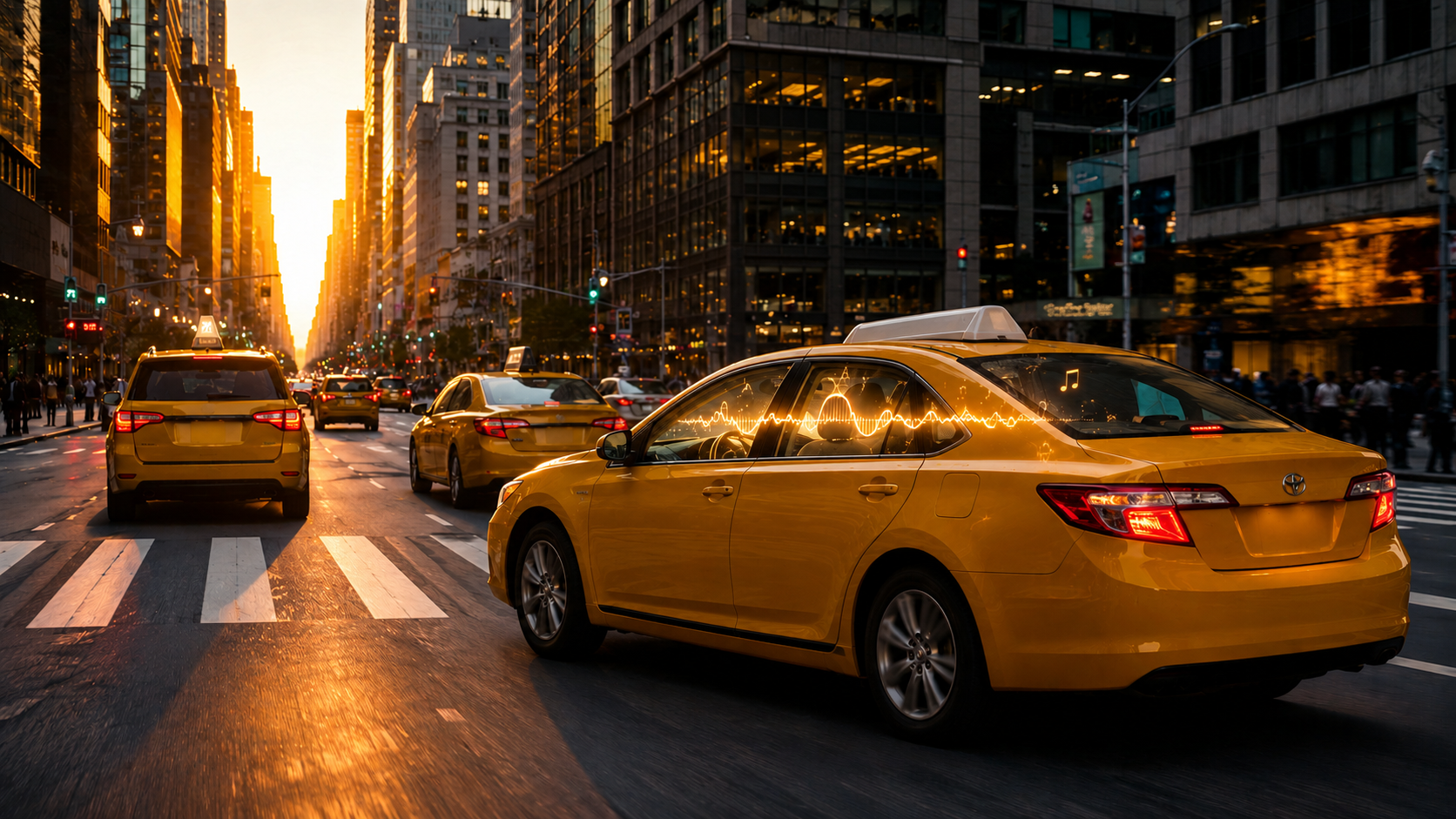
The most innovative format today is in car audio advertising. This approach allows brands to play short advertisements or even branded songs inside taxis and ride sharing vehicles. This form of taxi cab advertising reaches people during a time when they are relaxed and paying attention.
Taxi advertising sits within the broader category of rideshare advertising and mobile advertising. It combines the physical impact of outdoor media with the targeting power of modern marketing.
Urban mobility has changed how people move and how brands connect with audiences. Ride sharing apps have made taxis more accessible than ever. Millions of people now rely on daily rides for commuting, shopping, and travel.
This shift has created a massive opportunity for taxi advertising. A single taxi can generate thousands of impressions per day. When multiplied across a fleet, the reach becomes enormous. Unlike traditional outdoor media that stays in one location, taxi advertising moves through high traffic areas continuously.
Commuters also spend more time in vehicles than ever before. Longer travel times mean longer exposure to marketing messages. This creates repeated impressions that strengthen brand recall.
Taxi advertising also offers location based marketing potential. Campaigns can target airports, shopping districts, entertainment areas, and business hubs. This makes it ideal for brands that want to reach specific audiences in specific places.
The success of taxi advertising is rooted in human psychology. When people are inside a taxi, they are in a captive environment. They cannot skip ads or scroll past content. Their attention is naturally focused on their surroundings.
Audio marketing plays a particularly powerful role in this environment. Sound has a strong connection to memory and emotion. A catchy tune or memorable message can stay in a listener’s mind long after the ride ends.
Repetition also plays a key role. Daily commuters often hear the same messages multiple times. This repeated exposure builds familiarity and trust. Over time, the brand becomes part of the listener’s daily routine.
Taxi advertising combines attention, repetition, and emotional connection. This combination creates a marketing experience that feels natural rather than intrusive.
Traditional advertising relies heavily on visuals. However, audio advertising offers a deeper emotional connection. Music and sound trigger feelings and memories in a way that visuals alone cannot achieve.
Branded songs and jingles are particularly effective. When people hear music, they are more likely to remember the message associated with it. This is why some of the most famous advertisements in history are remembered for their songs.
Inside taxis, audio advertising becomes even more powerful. Passengers are not distracted by screens or competing content. They are present in the moment and more receptive to listening.
Imagine a commuter heading to work hearing a coffee brand song in the morning. Or a passenger traveling home hearing a food delivery jingle in the evening. These moments feel natural and relevant to daily life.
Taxi advertising that uses music creates emotional branding. It turns simple ads into experiences that people remember and even enjoy.
Taxi advertising offers several advantages that make it attractive to both large and small businesses.
Each taxi travels through busy streets, business districts, and residential areas. This creates thousands of daily impressions. Over time, the exposure becomes significant.
Brands can target specific neighborhoods, airports, malls, and entertainment zones. This makes taxi advertising ideal for location based campaigns.
Commuters often travel the same routes daily. Repeated exposure strengthens brand recall and recognition.
Compared to billboards and television advertising, taxi advertising offers lower cost per impression while maintaining strong visibility.
Passengers cannot skip or block ads inside taxis. This ensures consistent message delivery.
Audio and visual repetition increases the likelihood that audiences remember the brand.
Taxi advertising works across many industries because it reaches diverse audiences.
Food delivery and restaurants benefit by targeting commuters during meal times. Fintech and mobile apps reach tech savvy urban audiences who frequently use ride sharing services.
Ecommerce brands gain exposure across busy shopping districts. Entertainment platforms promote new releases to commuters heading to events or returning home.
Retail stores and malls use taxi advertising to drive foot traffic to nearby locations. Travel and tourism brands reach passengers heading to airports or hotels.
Local businesses and startups benefit from affordable exposure that builds brand awareness quickly. Taxi advertising levels the playing field by allowing smaller brands to compete with larger advertisers.
Dizzy specializes in turning taxi advertising into memorable audio experiences. The process is designed to help brands connect with audiences in a meaningful way.
The first step is understanding the brand. Every campaign begins with research into the target audience, brand voice, and campaign goals.
The second step is writing the brand song. Professional writers create catchy and memorable music that communicates the brand message clearly.
The third step is recording and production. High quality audio ensures the message sounds professional and engaging inside vehicles.
The fourth step is distribution across taxi networks. Campaigns are deployed across fleets of taxis and ride sharing vehicles.
The final step is campaign tracking and reporting. Brands receive insights into reach and performance.
This approach transforms taxi advertising into a powerful audio branding tool.
Traditional advertising channels are becoming crowded and expensive. Digital ads are often ignored or blocked. Television commercials are skipped. Billboards remain fixed in one place.
Taxi advertising offers mobility, attention, and repetition. It brings the brand directly into daily life rather than waiting for audiences to notice it.
Compared to radio advertising, taxi advertising provides a controlled environment with less competition. Compared to digital ads, it cannot be skipped or blocked. Compared to billboards, it moves across the city and reaches more locations.
This makes taxi advertising one of the most versatile and effective modern marketing channels.
The cost of taxi advertising depends on several factors. The size of the city, the number of vehicles, and the campaign duration all influence pricing.
Audio production and campaign scale also play a role. However, taxi advertising is generally more affordable than many traditional media channels.
Brands can start with smaller campaigns and scale as results grow. This flexibility makes it accessible to startups and established companies alike.
A successful campaign starts with a clear message. Short audio ads under thirty seconds work best. Catchy hooks and repetition help listeners remember the brand.
Targeting peak commute hours ensures the message reaches the right audience at the right time. Geo targeting helps focus campaigns on relevant locations.
Consistency across marketing channels strengthens brand identity. Combining taxi advertising with digital campaigns creates a powerful multi channel strategy.
Technology continues to transform mobility marketing. Artificial intelligence and data analytics are improving campaign targeting. Smart city integration will allow dynamic ad delivery based on location and time.
Taxi advertising is evolving into a sophisticated media network. Brands that adopt this channel early will gain a strong competitive advantage.
Taxi advertising combines real world visibility with captive attention. It offers high reach, strong recall, and emotional engagement through audio branding.
As audiences become harder to reach online, brands are turning to the streets for new opportunities. Taxi advertising provides a powerful way to connect with people during everyday moments.
For businesses looking to stand out, mobility based marketing offers a fresh and memorable approach. The road has become the new advertising frontier.
Taxi advertising is a form of out of home advertising that uses taxis and ride sharing vehicles to promote brands.
It offers high visibility, repeated exposure, and strong brand recall.
A single taxi can generate thousands of impressions per day.
It is often more cost effective than traditional outdoor and television advertising.